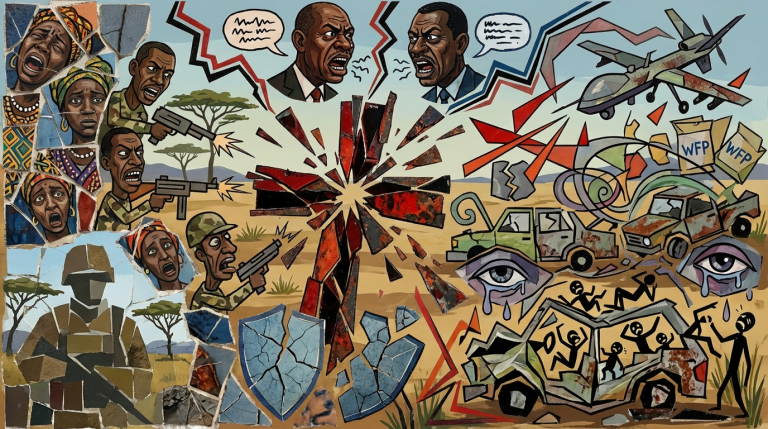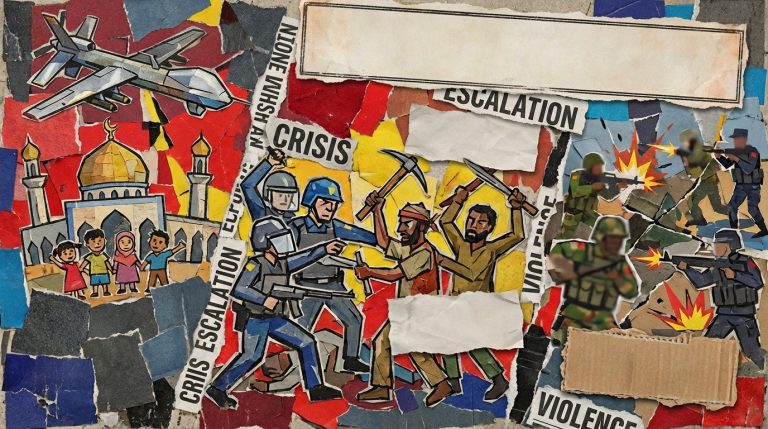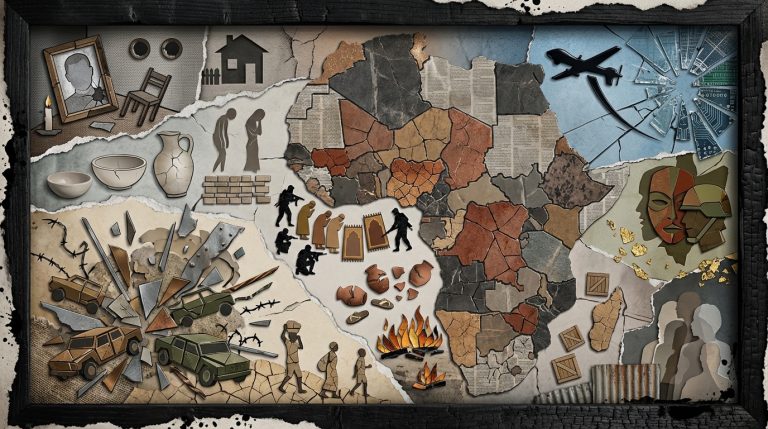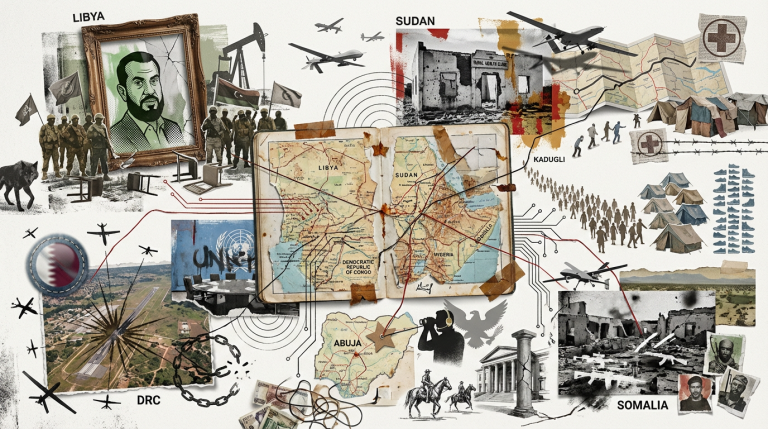
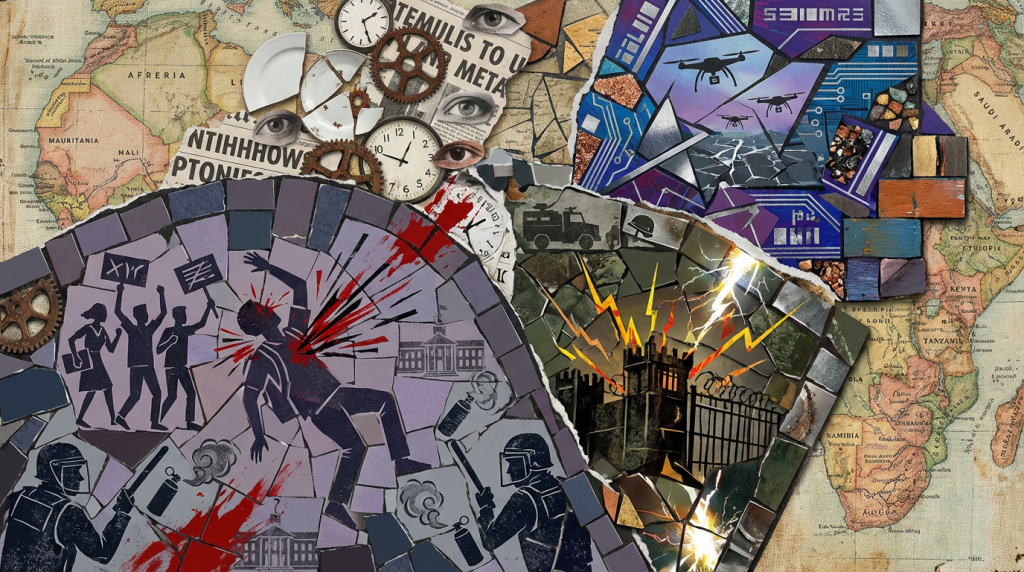
The past 24 hours have seen a significant escalation in drone warfare and private military involvement across Africa’s conflict landscape. In the Democratic Republic of Congo, private contractors linked to Erik Prince are now active on the frontlines, while Sudan faces a deepening crisis as regional neighbors (Ethiopia) are reportedly hosting training camps for paramilitary forces. Nigeria is seeing a shift in international support with a new US troop deployment, even as local peace deals crumble under banditry. Civil unrest has flared in Senegal and Guinea, while the Horn of Africa remains a tinderbox of shifting alliances between Egypt, Turkey, and Ethiopia.
a. Senegal: Student protests and police brutality
The killing of a student at Cheikh Anta Diop University (UCAD) in Dakar on 10 February 2026 has become a stark example of police brutality in Senegal. Protests began over delayed stipends, rising living costs, and worsening economic conditions, but escalated when police units entered student residential buildings to forcibly disperse demonstrators. Officers deployed tear gas and batons inside dormitory spaces, using heavy force against largely unarmed students. During this operation, Abdoulaye Ba sustained fatal head injuries by the police, later confirmed by medical sources as the cause of death.
His killing has transformed a campus protest into a broader symbol of state violence against economically strained youth. The incident highlights the sharp power imbalance between security forces and students, particularly as Senegal faces mounting debt pressure, inflation, and delayed external financing that have strained public spending on education and student welfare.As campuses increasingly become centres of dissent amid deepening economic frustration, the death of Abdoulaye Ba marks a defining moment in Senegal’s current cycle of youth mobilisation and demands for state accountability.
b. Guinea: Gunfire in the capital
On 10 February 2026, sustained gunfire erupted near Conakry’s central prison in the Kaloum administrative district, triggering panic across Guinea’s capital and prompting a rapid deployment of special forces and armoured vehicles to seal off the area. Witnesses reported heavy weapons fire lasting more than half an hour, with ambulances and military vehicles seen entering and leaving the prison compound as security forces moved to regain control.
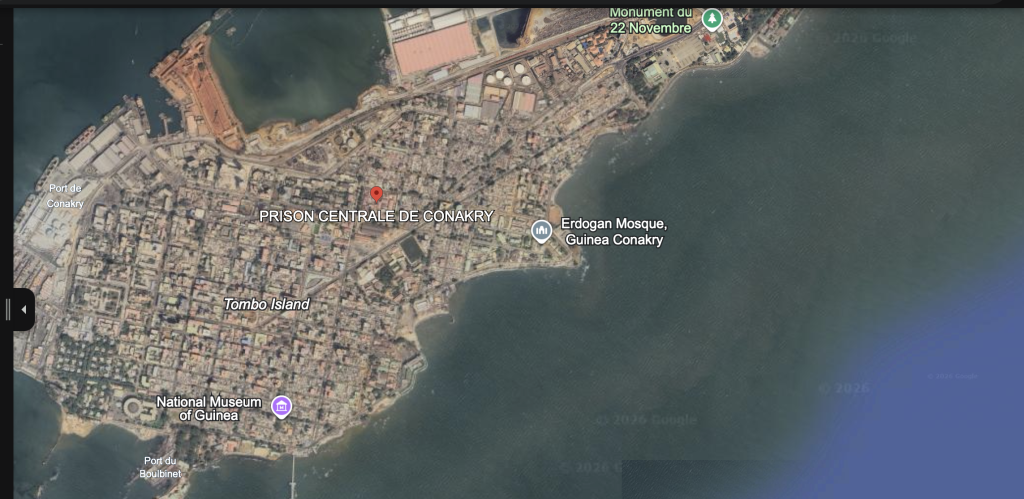
Authorities later confirmed the incident coincided with the transfer of Aboubakar Sidiki Diakité, a former presidential guard commander convicted for his role in Guinea’s 2009 stadium massacre. Officials said the move followed what they described as an “alarming” security situation inside the prison after the inmate resisted a surprise search and threatened officers. His lawyers condemned the transfer as arbitrary and unlawful.
The episode has revived concerns about instability around Guinea’s high-security detention system. Conakry’s central prison has previously been the site of violent jailbreaks and politically sensitive detentions, and the unexplained scale of gunfire in the capital’s administrative centre underscores ongoing tensions within Guinea’s security apparatus just weeks after the country’s military leader formalised his hold on power through elections.
c. DRC: Private military contractors and drone warfare escalate
Between February 09 and 10, 2026, eastern Democratic Republic of Congo (DRC) witnessed an intensification of the conflict as private military contractors and rebel forces employed drones against strategic targets, signaling a new phase in the ongoing instability.
In Uvira, South Kivu, a contingent of private military contractors linked to Erik Prince, the founder of Blackwater, deployed alongside the DRC Army to reclaim territory previously under rebel control. Leveraging advanced surveillance drones, Prince’s contractors was able to track rebel movements and coordinate targeted strikes, enabling government-aligned forces to regain control of the area. The renewed presence of Western private military contractors is tied to a “minerals-for-security” arrangement, under which foreign actors provide battlefield support in exchange for access to the region’s rich mineral resources.
As both sides increasingly rely on drone technology, the conflict is entering a more technologically sophisticated and volatile phase, where civilian infrastructure and military logistics alike are vulnerable to rapid, remotely executed attacks.
d. Libya: Migrant Deportations and Deadly Shipwrecks Highlight Humanitarian Crisis
Libya continues to face a growing humanitarian and security challenge as large numbers of African migrants attempt the perilous journey across its territory and the Central Mediterranean. On February 9, 2026, the Libyan Anti-Illegal Immigration Agency (Kufra branch) deported around 140 Chadian migrants, including individuals with security restrictions and confirmed infectious diseases, back to their home country. The operation followed all legal procedures and health checks, with temporary accommodations and exemptions from violation fees provided to those processed through assembly centers. Officials emphasized that deportations target migrants involved in legal violations, security risks, or health concerns, while maintaining a humanitarian approach. Libya currently hosts an estimated 3 million migrants, predominantly from Sudan (33%), Niger (22%), Egypt (19%), and Chad (10%), most concentrated in the western region.
The human cost of migration through Libya has been starkly shown by a recent shipwreck off the Libyan coast, in which 53 migrants died or went missing. The International Organization for Migration (IOM) reported that the vessel, carrying 55 people from various African nationalities, capsized north of Zuwara on February 6, leaving only two Nigerian women rescued. Survivor testimonies described the rapid sinking of the boat within six hours after departure from Zaouia, near Tripoli, with both survivors losing close family members in the tragedy.
According to IOM data, the Central Mediterranean route remains one of the deadliest migration corridors, with at least 484 migrants reported dead or missing in 2026 alone, following multiple “invisible” shipwrecks exacerbated by extreme weather conditions. Last year, more than 1,300 individuals disappeared along the same route. The UN agency warned that trafficking networks continue to exploit migrants, sending them in overcrowded, unsafe vessels while exposing them to abuse and severe protection risks. IOM has called for enhanced international cooperation, protection-oriented responses, and the creation of safe and regular migration pathways to reduce the deadly risks for people fleeing conflict and economic hardship in Africa.
Written by Mwende Mukwanyaga