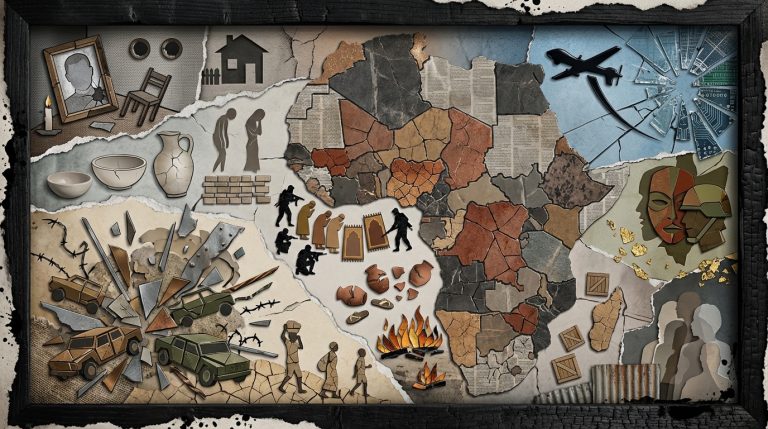
a. The end of the shadows: Russia’s open arrival in Niger to combat the militia conflict
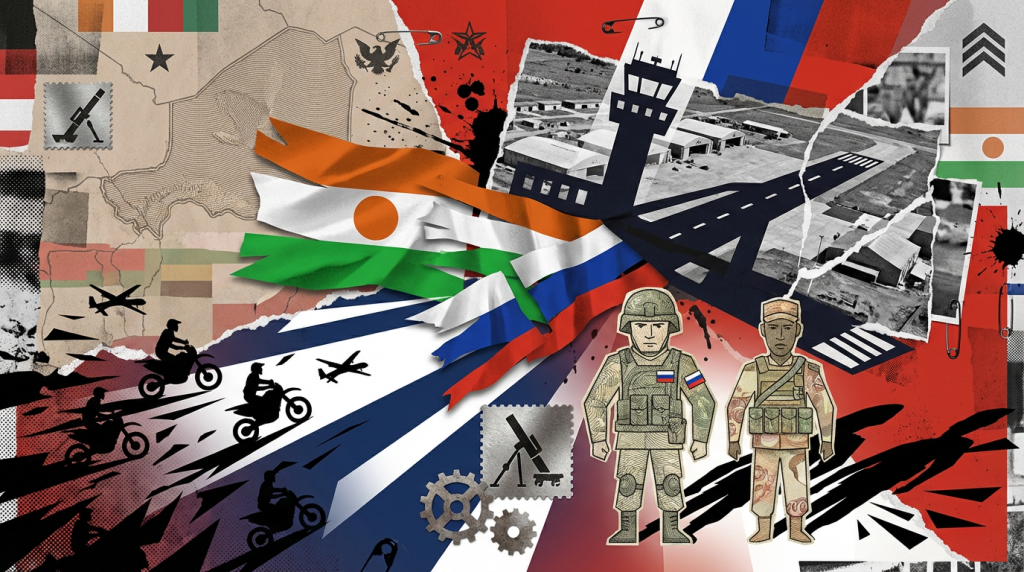
On January 29 2026, affiliate Islamic State in the Sahel militants attacked Diori Hamani International Airport in Niamey. A group of 30+ militants reportedly riding motorcycles, using drones and mortars, launched a coordinated assault on Air Base 101 and the civilian side. According to defence minister, Salifou Modi, fighting continued for 30 minutes before Nigerien ground and air forces, with support from the Russian Africa Corps stationed at the base, regained control of the site. Niger’s military government acknowledged that Russian Africa Corps personnel stationed there helped repel the assault, marking an overt public confirmation of Russian military support in Niger. The Russian Foreign Ministry also confirmed on February 2, 2026 that Russian troops participated in defending the airport alongside Nigerien forces.
This formal acknowledgment ends years of ambiguity over Russian involvement. By openly aligning with the Russian Africa Corps, a rebranded force succeeding Wagner that first deployed to Niger in April 2024 under formal security cooperation agreements signed in late 2023, the junta has secured a security partner unconstrained by democratic conditions, weakening ECOWAS’s leverage without fully resolving its regional isolation. The move also reflects a second-order consequence of France’s phased military withdrawal: Paris completed the pullout of its troops and closed its embassy by December 2023, ending decades of French military presence and leaving a security vacuum that Russia’s Africa Corps is helping to fill.
b. The Jonglei Exodus: Why South Sudan’s internal fractures are an emergency
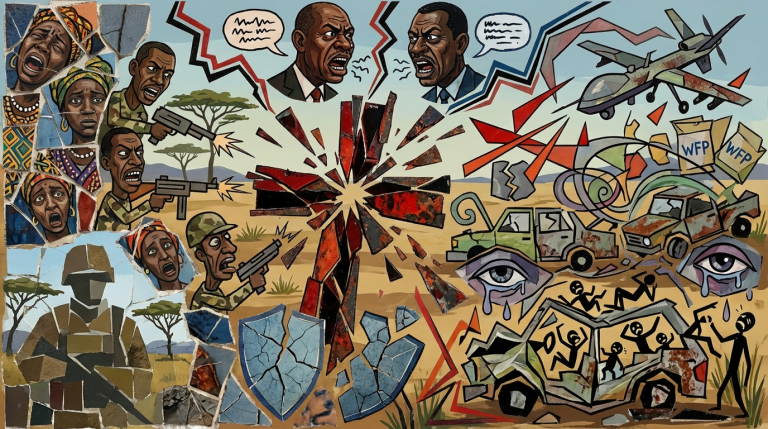
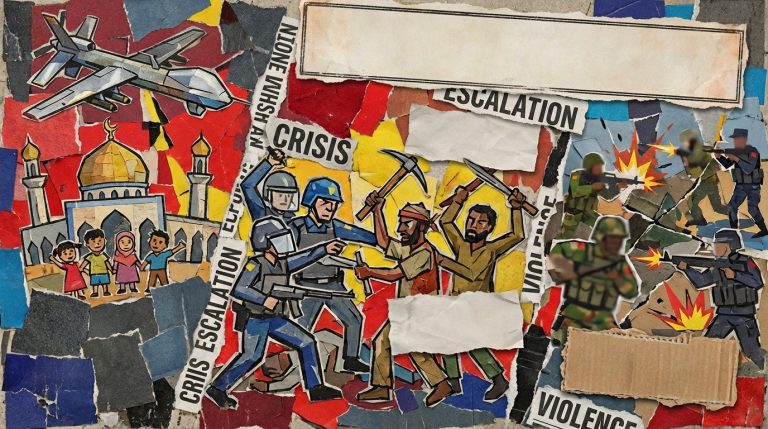
The renewed Jonglei State offensive pits South Sudan government forces (SSPDF) against opposition-aligned SPLA-IO elements and forces more than 180,000 people from their homes in less than a month, driven by intensified fighting and imminent military operations, according to UN humanitarian agencies. As of February 03 2026, humanitarian access has been restricted, with authorities suspending key flights and convoys, cutting off medical evacuations and blocking aid deliveries. The World Food Program has stated that safe humanitarian access must be restored immediately to prevent crisis-level hunger from turning into outright catastrophe, especially as nearly 60 % of Jonglei’s population faces acute food insecurity during the lean season.
This signals mediation fatigue. The violence unfolds without a fixed frontline, keeping it out of global view, but the scale of displacement exposes a deeper reality: the 2018 Revitalized Agreement on the Resolution of the Conflict in South Sudan (R-ARCSS) is collapsing. The peace process has been repeatedly delayed, undermined by political mistrust, continued violations of ceasefire terms, and the detention and trial of key opposition leaders, all of which have eroded confidence in the agreement as a framework for conflict resolution. For civilians in Jonglei, the widening gap between peace on paper and reality on the ground means death with no visible frontline.
c. The coastal creep: Why Benin and Togo are on edge
The insurgency that once felt contained within the landlocked Sahel is now actively hemorrhaging toward the Atlantic. Analysts and security reports note that militant Islamist violence, particularly by JNIM and related groups, is moving south and west from the Sahel into coastal West Africa, with incidents and fatalities rising in countries like Benin and Togo near the Sahelian border zones.
On 01–02 February 2026, gunmen (often described locally as “bandits”) attacked Agwara Local Government Area in Niger State, Nigeria, burning the police station and parts of a church, killing at least one person and abducting five residents in a coordinated early‑morning raid. The Niger State Police Command confirmed the attack and that assailants used dynamite to blow up the Agwara police station before burning parts of the building and taking hostages. Another case of jihadist expansion toward coastal states is the 08 January 2025 attack in northern Benin’s Alibori Department by JNIM, which killed at least 28 Beninese soldiers and signaled a threat well beyond the traditional Sahel core.
d. The peace gap: Sudan’s descent into proxy warfare
As of February 01–03 2026, the conflict in Sudan intensifies across central and eastern regions. Following the collapse of the Jeddah peace talks, the Rapid Support Forces (RSF) pushed deeper into central areas, leaving the Sudanese Armed Forces (SAF) struggling to hold positions. Civilians face a humanitarian catastrophe, with widespread displacement, shortages of food and medicine, and destruction of infrastructure. UN officials describe the situation as “horror and hell”, highlighting the urgent need for aid and protection.
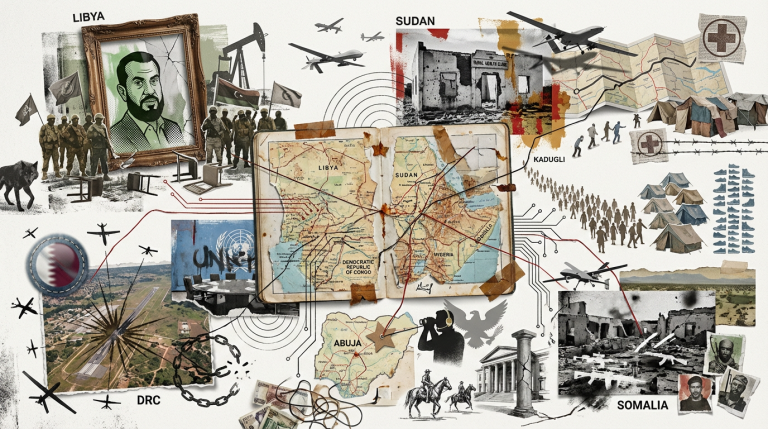
The conflict is no longer purely internal. External actors shape the battlefield, turning Sudan into a high-stakes proxy arena. Egypt deploys Turkish-made Bayraktar Akinci drones near the East Oweinat border, roughly 60 km from Sudan, signaling a more direct role in the war and raising the stakes for RSF and SAF positions. Meanwhile, Gulf states such as the UAE and Saudi Arabia reportedly provide material and financial support to rival factions, amplifying the intensity of the fighting.
Diplomatic efforts remain stalled. In late January 2026, SAF chief Abdel Fattah al-Burhan met with a UK military delegation, but these talks failed to produce a ceasefire or meaningful compromise. With no credible mediator present, Sudan is not just falling apart internally, it is being pulled apart by competing regional interests, leaving civilians trapped in a widening humanitarian disaster.
e. The Resource War: The CAR Blueprint in Niger
Reports from February 02-03 2026, show clashes between Africa Corps forces and rebel groups near northern mining zones, signaling a shift from traditional territorial defense toward extractive security, where protecting valuable resources becomes a central mission rather than conventional counter‑insurgency. As the French military withdrawal concludes, security in the region is increasingly being redefined as a commodity traded for resources.
In the Central African Republic, Russian-linked forces have successfully tied regime survival to the protection of mining interests, exchanging security guarantees for access to gold, diamonds, and other resources, a model Moscow is now exporting across the Sahel. The Ndassima gold mine exemplifies this pattern: under the new security architecture, a state’s stability is inseparable from the value of its most prized mining assets, and military protection and political leverage are increasingly contingent on resource control.
Conclusion: A New Map of Influence
As the continent navigates this multipolar, resource-driven security environment, the central question is no longer whether Western actors can reassert authority, but how these new actors will manage the power vacuums they exploit.
Written by Mwende Mukwanyaga, Image generated with Nano Banana Pro.