a. Church and clergy targeted by gunmen in Nigeria
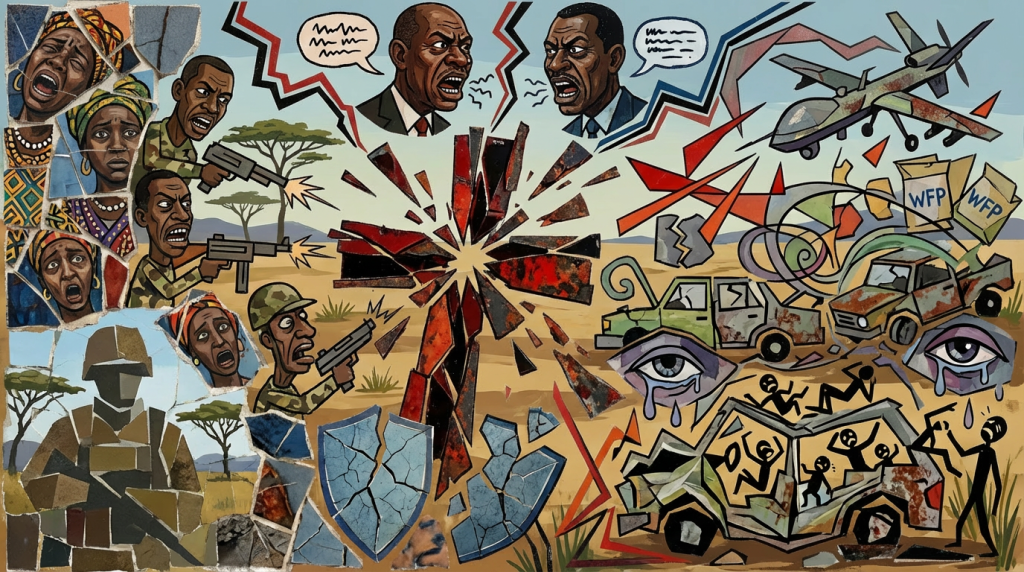
In the early hours of 07 February 2026, gunmen launched a predawn raid in Kauru Local Government Area, located in northern Kaduna State, Nigeria. The attackers struck a residential area linked to the Holy Trinity Catholic Church, killing three people and abducting 11 villagers, including Reverend Father Nathaniel Asuwaye, the parish priest. Security forces engaged the assailants during the raid, resulting in a brief firefight, but the attackers successfully fled with their captives. Both church and police sources confirmed the deaths and abductions.
This violent incident forms part of a broader pattern of insecurity and conflict across northern and central Nigeria, where both armed extremist groups and armed militias frequently target rural communities. In recent weeks, religious leaders, churches, and local populations have faced repeated attacks.
b. RSF drone strike kills displaced civilians in Sudan
In North Kordofan State, Sudan, a series of drone strikes by the paramilitary Rapid Support Forces (RSF) targeted humanitarian operations and vulnerable civilians between 7 and 9 February 2026, worsening an already dire humanitarian crisis.
On 7 February, a World Food Programme (WFP) aid convoy carrying life‑saving food supplies and fuel was hit by a drone strike as it traveled toward displaced populations in North Kordofan, killing at least one aid worker, injuring others, and destroying vital food assistance before the trucks could reach their destination. The attack severely disrupted planned deliveries of food for families already facing acute shortages.
The following day, in a separate but related incident, another RSF drone attack struck a vehicle carrying displaced people near Al‑Rahad, killing at least 24 civilians, including eight children, among them infants. The vehicle had been transporting families fleeing ongoing violence in nearby areas, and medical groups said survivors were taken to Rahad amid severe shortages of supplies and treatment capacity. These back‑to‑back attacks on both civilian transport and humanitarian relief convoys drew international condemnation from United Nations officials, regional bodies, and foreign governments as serious violations of international humanitarian law.
Across the wider Kordofan region in the span of just over two weeks to early February, United Nations monitoring reported that nearly 90 civilians were killed and over 140 injured in drone strikes, with drones striking not only convoys and displaced groups but markets, health facilities, and residential neighborhoods. The rapid escalation of these attacks has further undermined relief operations and deepened the humanitarian disaster in one of Sudan’s most conflict-affected states.
c. South Africa announces phased withdrawal from the MONUSCO UN peacekeeping mission in the DRC.
In the Democratic Republic of Congo (DRC), South Africa announced on 08 February 2026 that it would begin a phased withdrawal of approximately 700 troops from the MONUSCO UN peacekeeping mission. The decision marks a significant shift in the regional security landscape, coming at a time of heightened rebel activity in eastern DRC, particularly by the M23 insurgents. The withdrawal, scheduled for completion by the end of 2026, will be coordinated with the United Nations to ensure an orderly handover.
d. The peace gap: Sudan’s descent into proxy warfare
Between 07 and 09 February 2026, longstanding tensions between Ethiopia and Eritrea flared into a public diplomatic confrontation involving mutual accusations, territorial claims, and competing narratives about military involvement and rebel support.
On 07 February, Ethiopia’s foreign minister Gedion Timothewos sent a formal diplomatic letter to his Eritrean counterpart, accusing neighbouring Eritrea of military aggression and of providing material support to armed groups operating within Ethiopian territory along parts of the shared northwestern border. Addis Ababa claimed that Eritrean forces had occupied sections of Ethiopian land, acted in concert with rebels, and engaged in joint manoeuvres that constituted ‘acts of outright aggression.’ In the letter, the Ethiopian government called on Asmara to immediately withdraw its troops and cease all cooperation with insurgent groups, while also stating that Ethiopia remained open to dialogue on broader issues, including access to the Red Sea through Eritrean ports, if Eritrea respected Ethiopian sovereignty.
In response, on 9 February, the Eritrean ministry of information issued a brief but rebuttal, rejecting Ethiopia’s allegations as ‘false and fabricated’ and describing them as part of what it called a hostile campaign by Addis Ababa against Eritrea. Asmara’s statement, delivered through official channels, said the accusations were ‘astounding in their tone and substance’ and suggested that Ethiopia was advancing an ‘ulterior agenda’ rather than addressing genuine security concerns. Eritrea framed the claims as part of a pattern of baseless denunciations it has faced over the past two years, and stated that it had no appetite for further acrimony that would escalate tensions.
The fallout reflects a deepening rift between the two neighbours, historically bitter rivals that fought a devastating border war from 1998 to 2000 and briefly cooperated during Ethiopia’s conflict with the Tigray People’s Liberation Front (TPLF). The recent exchange indicates a renewed erosion of trust, with both governments framing the dispute in starkly contrasting terms: Ethiopia portraying Eritrea as an external destabilizing force, and Eritrea dismissing those claims as contrived and politically motivated.
e. Somalia–Saudi Arabia Defense Cooperation Agreement
On 09 February 2026, the governments of Somalia and Saudi Arabia formalised a new defense and military cooperation agreement in Riyadh, marking a significant shift in security partnerships in the Horn of Africa. The memorandum of understanding was signed by Somali Defence Minister Ahmed Moallim Fiqi and Saudi Defence Minister Prince Khalid bin Salman, reflecting deepening military ties between Mogadishu and Riyadh. The agreement – concluded on the sidelines of the World Defense Show 2026 – sets out an expanded framework for collaboration on training, capacity‑building, technical support, and broader security cooperation between the two nations.
Somali officials described the pact as a strategic partnership aimed at strengthening the capabilities of the Somali National Army, enhancing its operational readiness, and supporting professionalisation efforts after decades of internal conflict and insurgency. The accord includes provisions for joint training programmes, the exchange of military expertise and doctrine, and potential support with defence technology and equipment, which Mogadishu views as essential to sustaining pressure on armed groups such as al‑Shabab and securing key coastal and border areas.
The agreement also carries broader geopolitical significance. Somalia’s pursuit of deeper ties with Saudi Arabia comes amid a realignment of external influences in the region, particularly following Mogadishu’s termination of defense and security agreements with the United Arab Emirates earlier in January 2026 and rising tensions linked to disputes over the breakaway region of Somaliland. The Saudi pact is widely seen as part of Somalia’s effort to diversify its security partnerships, counterbalance rival Gulf influences in the Horn, and underscore Riyadh’s interest in Red Sea and Indian Ocean security dynamics.
While full implementation details remain emerging, officials in both capitals framed the agreement as a milestone in bilateral cooperation that could shape defence collaboration well beyond 2026.
Conclusion:
From the targeting of civilians and clergy in northern Nigeria to drone strikes devastating humanitarian operations in Sudan, the violence highlights a worrying trend: non-state actors and paramilitary forces are exploiting fragile governance, porous borders, and resource vulnerabilities to expand influence. Meanwhile, state-level maneuvers, such as South Africa’s MONUSCO withdrawal and the Somalia–Saudi Arabia defense pact, reflect a strategic recalibration by national governments seeking security, leverage, and regional partnerships amid rising instability.
Written by Mwende Mukwanyaga.