
Malaysia
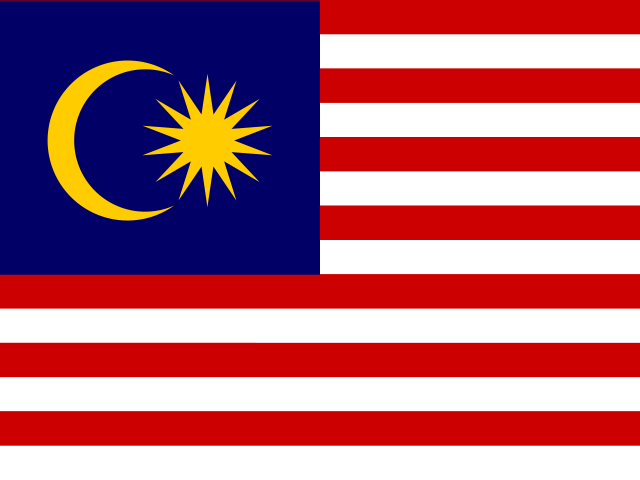
|
Status of conflict |
Not an armed war, but a structural, legal, and rights conflict.Ongoing. Activists continue to challenge MA63’s validity and Indigenous communities face resource exploitation and land rights violations. |
|
Common name used for the war/conflict |
MA63// (southern insurgency) |
|
Conflict Start Date |
Date: 1963 – present. |
|
Location |
Malaysia (Sarawak and Sabah), with legal disputes raised internationally (UK, UN, ICJ references). |
|
Key parties |
Federal Government of Malaysia – formed through MA63. |
|
Key Legal Issues: |
Contested legitimacy of MA63: Critics argue colonies had no capacity to sign treaties in 1963 (echoing ICJ Chagos ruling). |
|
Key Events: |
1963 – Malaysia Agreement signed; Malaysia formed on 16 Sept 1963. |
|
Humanitarian/Community Impact: |
Ongoing land disputes, threats of eviction, and police intimidation. |
What the Conflict is Really About
At its heart, the MA63 dispute is about self-determination, autonomy, and resource control in Malaysia’s eastern states.
Legitimacy of the Federation:
Critics see Malaysia’s formation as a fraudulent or coerced colonial-era project, arguing Sabah and Sarawak never freely consented. If MA63 is void, then Malaysia’s legal foundation is shaky, turning this into a question of sovereignty, not just federal-state relations.
Broken Promises of Autonomy:
Sabah and Sarawak were promised autonomy safeguards (e.g., immigration control, fiscal independence, parliamentary weight). Over decades, these were undermined through “Malayanisation” and centralization, leaving locals feeling dispossessed within their own federation.
Land and Indigenous Rights:
Indigenous communities like the Iban face encroachment from powerful timber and plantation companies, backed by state authorities. Native Customary Land (NCL), crucial for livelihood and identity, is often unrecognized formally, making Indigenous peoples vulnerable to dispossession and eviction.
Economics of Exploitation:
Resource wealth, timber, oil, gas, is extracted largely for federal or elite gain, while local communities see little benefit. Certification schemes meant to ensure sustainability (MTCS) are widely seen as ineffective or complicit.
International Dimensions:
Activists use international law (UN decolonization principles, ICJ rulings) to argue their case, reframing what Malaysia treats as a “domestic issue” into a global decolonization dispute. This mirrors conflicts elsewhere (e.g., Chagos, Western Sahara).