
Mali
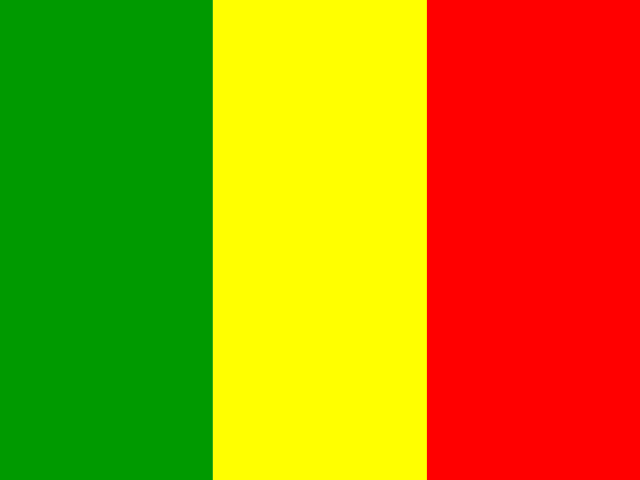
|
Status of conflict |
Active high-intensity war |
|
Common name used for the war/conflict |
Tuareg rebellion + Mali jihadist insurgency |
|
Conflict Start Date |
2012 (Tuareg rebellion and jihadist takeover of northern Mali). |
|
Key parties |
Government side: Malian Armed Forces (FAMa), Wagner Group (Russia), pro-government Tuareg/Arab militias (GATIA, Platform coalition). |
|
Key Legal Issues: |
Contested legitimacy of MA63: Critics argue colonies had no capacity to sign treaties in 1963 (echoing ICJ Chagos ruling). |
|
Key Events: |
Key events: |
|
Humanitarian/Community Impact: |
Over 6 million people in need, thousands displaced internally and across borders, widespread massacres against civilians. |
What the Conflict is Really About
At its core, Mali’s war is about overlapping crises: A centre–periphery split (Bamako vs. Azawad), Religious extremism (Al-Qaeda/ISIS embedding locally), Communal feuds (Dogon vs. Fulani), and great-geopolitical competition (France out, Russia in).
Tuareg vs. State: The conflict began as a Tuareg separatist struggle for an independent Azawad. That aspiration never disappeared; even after the Algiers Accord, separatists remain armed and sceptical of Bamako.
Jihadist Expansion: Al-Qaeda (through JNIM) and ISIS (through ISGS) turned Mali into a frontline of global jihad. They exploit ethnic tensions, particularly between Fulani herders and Dogon farmers, to recruit and expand.
Ethnic Violence: Community militias formed for “self-defense” but now commit massacres. Dogon militias target Fulani, while Fulani groups are accused of collaborating with jihadists.
State Fragility: Coups, weak governance, and corruption mean Bamako struggles to control the countryside. Trust between communities and the state is shattered.
Geopolitical Layer: With France gone and the UN leaving, Russia’s Wagner Group has become the main external actor, reshaping alliances but also fuelling reports of atrocities.